Services Provided:
Structural Investigation, Condition Assessment, Non-Destructive Testing
Sector:
Marine & Coastal Infrastructure
Client:
Confidential Client
Location:
Main Beach
Comprehensive condition assessment of Marina Mirage’s waterfront infrastructure including revetment walls, rock boulder protection, and concrete/timber boardwalk systems. Using advanced non-destructive testing techniques, TRSC evaluated structural performance in harsh marine environment conditions, providing asset management recommendations for prioritised maintenance and remediation planning.
Marina Mirage sits at the edge of the Broadwater, where retail and dining venues meet marina berths. The infrastructure making this possible includes revetment walls holding back water and earth, boardwalk structures providing waterfront access, and various concrete and timber elements continuously exposed to harsh marine conditions. After decades of service in this environment, a comprehensive assessment was needed to understand how these structures were performing and what interventions might be necessary. Marine environments create unique challenges. Salt-laden air carries chloride ions that penetrate concrete and initiate reinforcement corrosion even when structures aren’t in direct contact with seawater. Tidal action and wave forces impose loading patterns that don’t exist in conventional structures, while wet-dry cycles accelerate certain deterioration mechanisms.
The investigation deployed multiple non-destructive testing techniques to understand structural conditions without requiring destructive opening up of finished surfaces. Ground Penetrating Radar sent electromagnetic pulses into concrete elements, with the return signals revealing the location and configuration of reinforcing steel. Ferroscan electromagnetic scanning provided more detailed reinforcement mapping, showing bar sizes, spacing, and cover depths. Schmidt Hammer testing gave concrete strength estimates by measuring surface hardness, providing data about material properties without needing laboratory testing of cored samples. These technological methods were complemented by traditional visual inspection, with engineers documenting surface conditions and looking for cracking patterns, spalling, staining, and deterioration that indicate underlying structural problems.
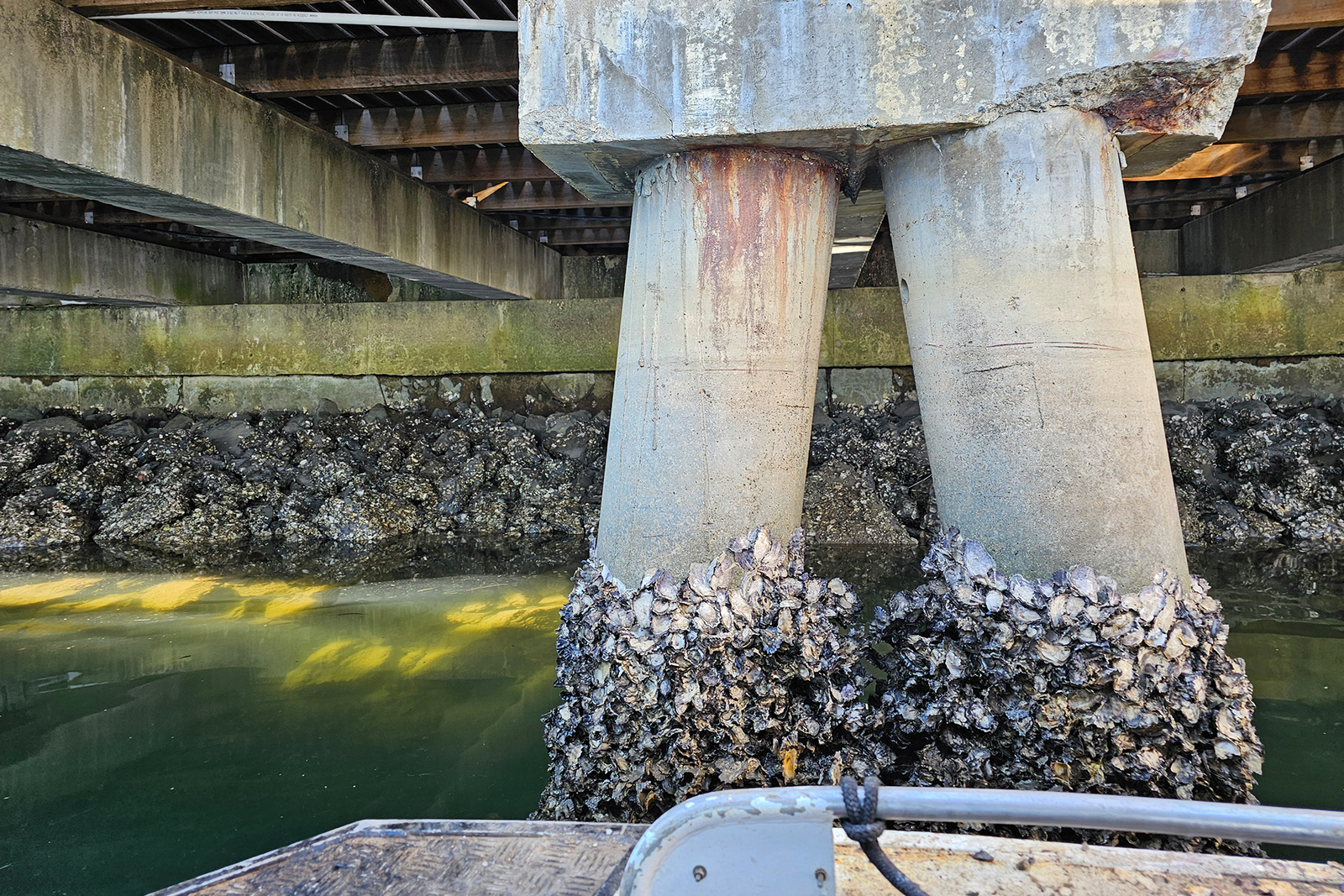
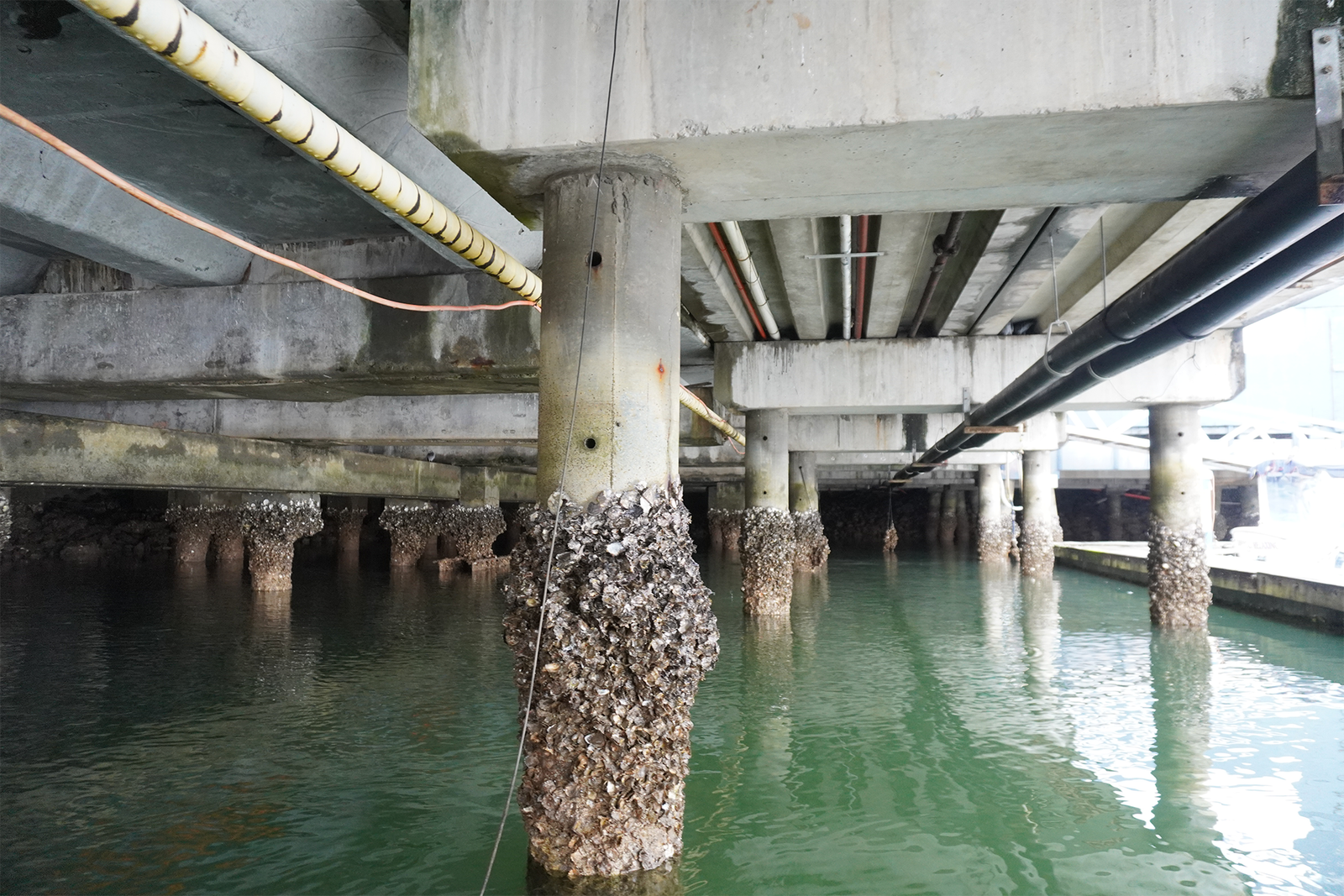
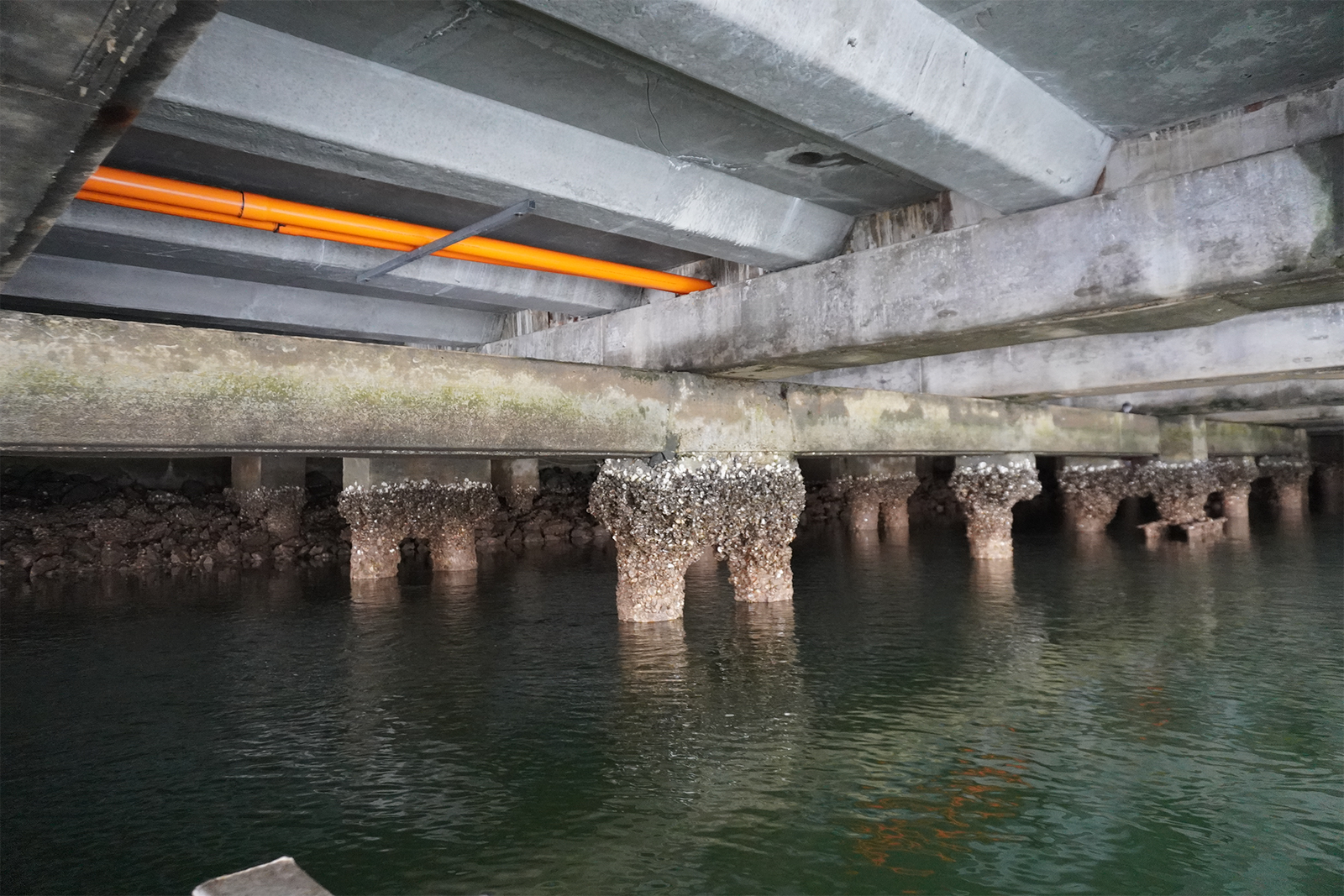
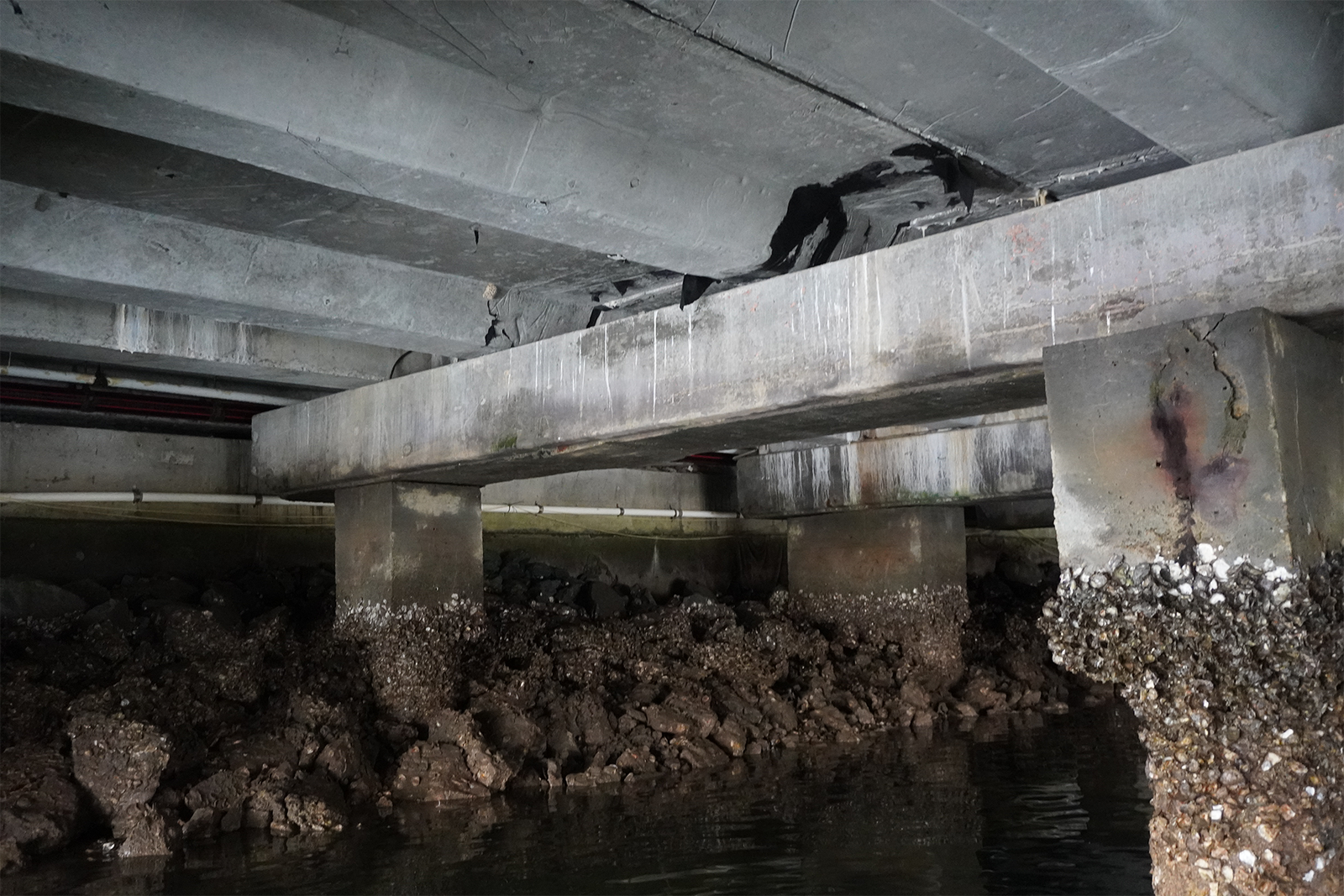
The investigation identified which elements were performing well, which were showing early signs of deterioration that could be managed through targeted maintenance, and which might need more substantial intervention. This risk-based approach allows asset managers to prioritise maintenance spending based on actual structural condition rather than simply age or appearance. Rock boulder walls were examined for movement or settlement, with attention to whether erosion was undermining foundations. Concrete retaining walls were assessed for cracking patterns that might indicate overloading or foundation movement, surface spalling from reinforcement corrosion, and efflorescence or staining indicating water movement through the concrete. For boardwalk structures, pile inspection focused on the tidal zone where marine environment exposure is most severe, checking for section loss from corrosion or abrasion and any evidence of undermining.
The deliverable assessment report provided not just current condition information but recommendations for ongoing monitoring, preventive maintenance, and any remediation work that might be advisable. This enables informed decision-making about maintenance spending priorities. For waterfront infrastructure, the accelerated deterioration that marine exposure creates makes periodic detailed assessment particularly important. Understanding which elements need attention now versus which can wait allows capital to be directed where it’s truly needed, supporting long-term asset management in an environment where conditions will continue to be demanding.
Send us a message with details about your project and we’ll get back to you within 24 hours to arrange a chat.
Connect with us directly by email or phone via the details below.
admin@trsc.au
1300 023 184