Marine Deterioration Mechanisms:
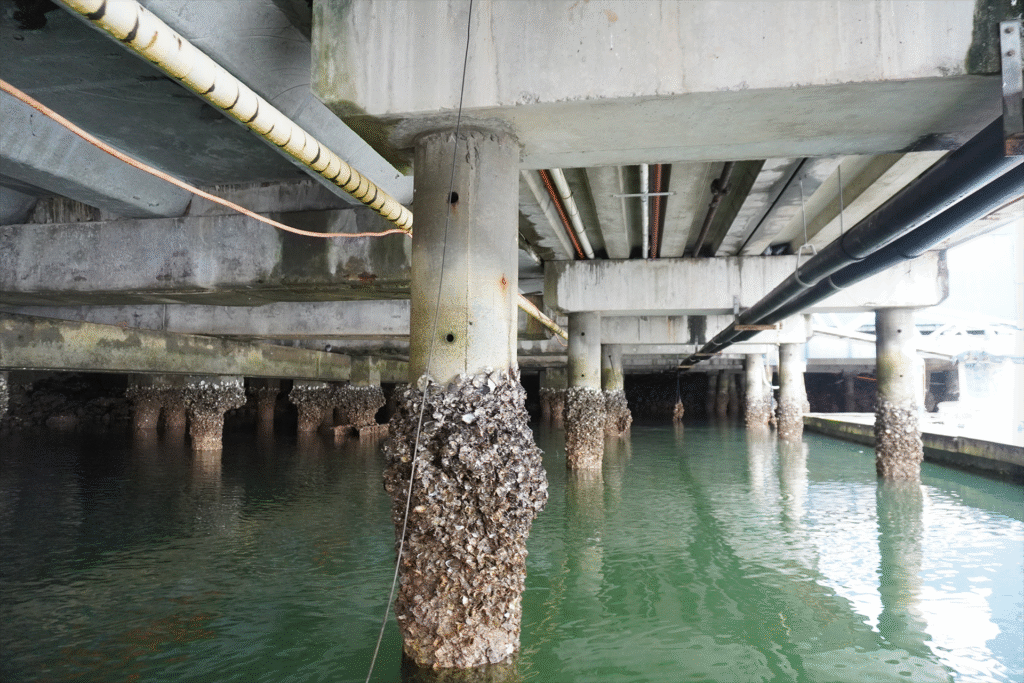
Structures exposed to tidal action, wave forces, and salt-laden air experience accelerated concrete deterioration from chloride-induced corrosion. Splash zone creates particularly aggressive conditions with wet-dry cycling and direct saltwater contact. Marine environment deterioration rates exceed inland infrastructure by factors of 5-10, requiring specialized assessment and remediation approaches.
Marine Infrastructure Services:
Marina Mirage Comprehensive Investigation (Gold Coast): 37-year-old marine infrastructure at Main Beach including concrete boardwalk system, revetment walls, rock boulder protection, and 120 concrete piles required structural assessment for planned redevelopment. Previous engineering report recommended demolition and rebuild of all 120 piles citing corrosion and spalling. Estimated replacement cost: $6M.
TRSC investigation included:
Investigation revealed majority of piles retained sufficient structural capacity for proposed redevelopment. Targeted replacement and refurbishment of deteriorated elements combined with protective systems for serviceable piles provided cost-effective solution. Investigation cost: $350,000. Cost avoidance: $6M in unnecessary demolition and reconstruction—a 17:1 savings ratio. Additional benefit: reduced construction timeline by minimizing demolition and replacement scope.
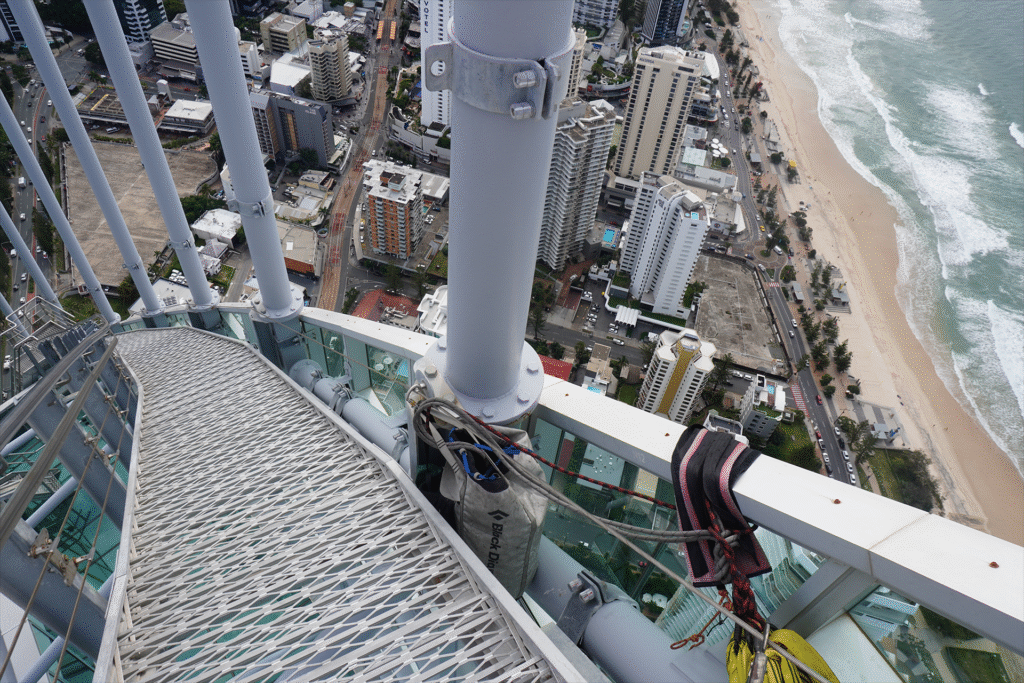
Q1 Spire Marine Environment at Extreme Height: Cyclone Alfred response at 322.5m tower demonstrated understanding of accelerated coastal corrosion at extreme height. Marine-grade 316 stainless steel specification and structural health monitoring addressed chloride-induced corrosion in high-elevation marine exposure—unique engineering challenge combining coastal deterioration mechanisms with high-rise building constraints.
Durable Marine Remediation Design:
TRSC designs repair systems proven in aggressive chloride environments including:
Strategic Maintenance Planning:
Monitoring programs track marine structure deterioration over time, enabling optimized intervention timing based on actual conditions rather than arbitrary schedules. Chloride profiling establishes ingress rates forecasting when corrosion initiation will occur, allowing proactive remediation before serviceability impacts or safety concerns develop.
Southeast Queensland’s extensive coastline, river systems, and marine infrastructure create ongoing demand for specialized waterfront engineering. TRSC’s Brisbane and Gold Coast presence enables rapid response and local knowledge of regional marine exposure conditions.
Send us a message with details about your project and we’ll get back to you within 24 hours to arrange a chat.
Connect with us directly by email or phone via the details below.
admin@trsc.au
1300 023 184