Q1 Tower
TRSC's structural engineering programme on Q1 Tower, Surfers Paradise - facade audit, Cyclone Albert response, RPEQ make-safe and remediation.
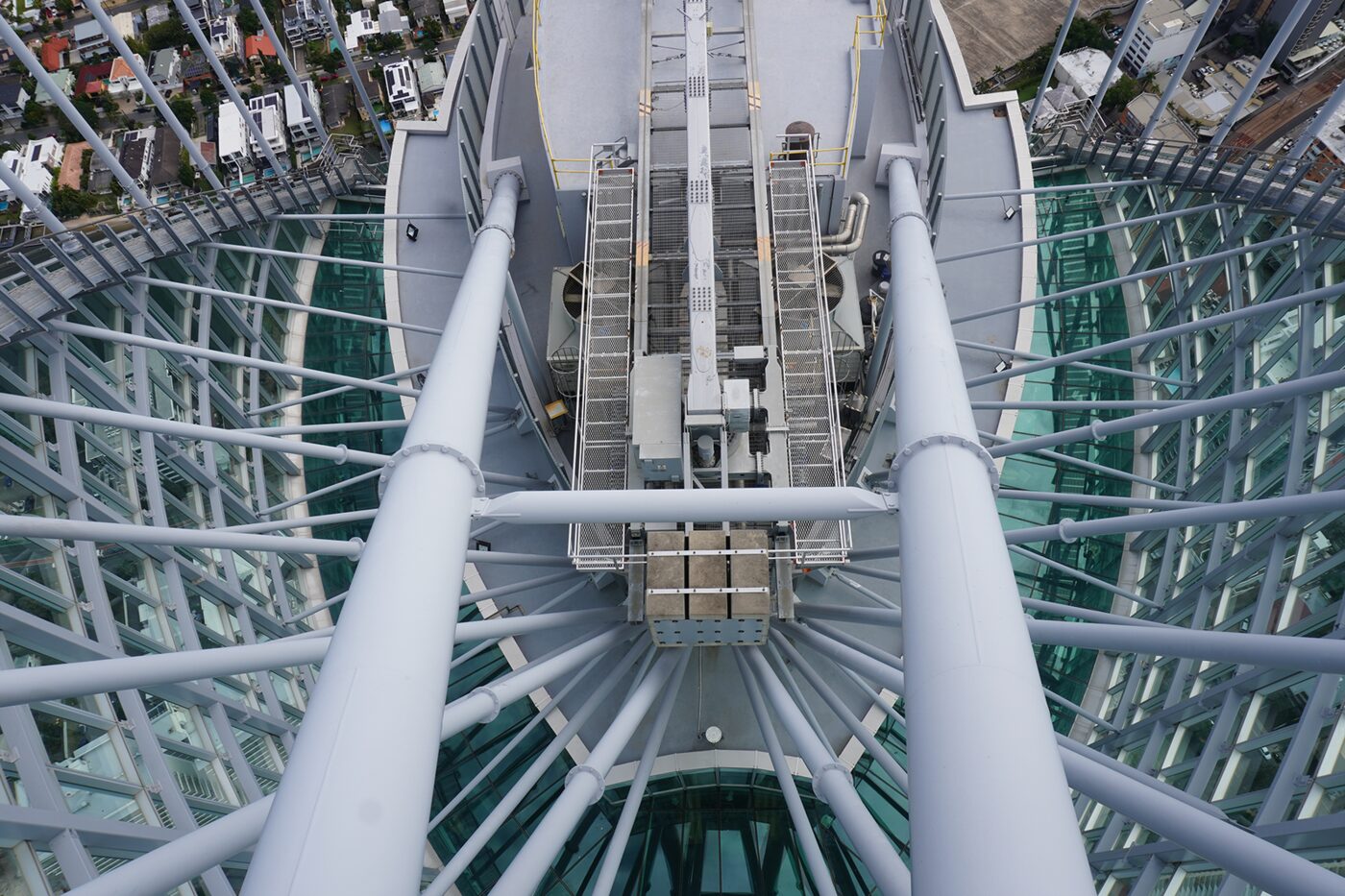
Q1 Tower (Queensland Number One) is a 78-storey residential skyscraper at 9 Hamilton Avenue, Surfers Paradise. Topped out in 2005 to a spire-tip height of 322.5 metres, it was the world's tallest residential building from completion until 2011 and remains the tallest building in Queensland and the second-tallest in Australia. The tower's form was designed by Atelier SDG / Innovarchi and references the Sydney 2000 Olympic torch, with a tapered post-tensioned concrete core and an exposed structural steel spire that contributes roughly 50 metres to overall height. Engineering of the 250,000-tonne tower was led by Robert Bird Group, who developed the post-tensioned floor plate system and the aerodynamic spire frame to manage along-wind and cross-wind oscillation in the cyclone-influenced Gold Coast wind region. The tower contains 527 apartments, an observation deck on Levels 77-78 (SkyPoint), retail and gymnasium podium levels, and the world's third-fastest passenger lifts at the time of completion. Notable engineering features include a tuned-mass damper at high level (originally specified to manage spire dynamics), a perimeter-braced steel spire that resolves wind-induced vortex shedding, and a deep raft foundation engineered to accept lateral wind base shear in highly-saturated coastal soils. The tower is exposed to the most severe combination of marine atmosphere, cyclone wind loading, lightning strike, and ultraviolet exposure of any high-rise asset in Queensland, which is why its facade and spire systems are subject to a periodic structural audit cycle rather than a fixed maintenance schedule. Q1 Tower is privately owned by its Body Corporate; SkyPoint is operated by Experience Co under licence.
TRSC has been engaged on Q1 Tower under OPUS programme 004 across three discrete work packages. The first, executed in 2024, was a Level 74 penthouse glass panel investigation in response to anchorage queries raised by the building manager. The second, completed in early 2025, was a full spire facade audit covering Level 79 through to the spire tip, undertaken using building maintenance unit (BMU) drops in coordination with the building's vertical access provider. The third, dispatched within 48 hours of Cyclone Albert's Gold Coast landfall on 7-10 March 2025, was an emergency post-cyclone assessment across nine BMU drops focused on critical spire zones. Investigation methodology spanned bolt and nut torque verification on structural steel splice plates, marine corrosion assessment of exposed steel members and flashing fixings, facade panel anchorage integrity testing, and visual condition documentation correlated to the original structural drawings. Findings were classified into a risk register that drove the design of immediate make-safe works, including stainless steel stitch plates installed on the spire frame to arrest movement at known-deficient connections, and a permanent remediation specification covering corrosion treatment, protective coating reinstatement, and a long-term monitoring regime. The engagement was initially commissioned by Glasspec Pty Ltd on behalf of the body corporate; following the cyclone response, TRSC was retained as the structural engineering partner for ongoing facade and spire works. All deliverables are RPEQ-certified.
Engineering questions about Q1 Tower
Has TRSC worked on Q1 Tower?
How tall is Q1 Tower?
What structural challenges does Q1 Tower face?
Did Q1 Tower sustain damage during Cyclone Albert?
- WikipediaQ1 Tower - Wikipedia
- Owner / OperatorQ1 Tower official building site
- Owner / OperatorSkyPoint Observation Deck
- GovernmentCyclone Alfred - Bureau of Meteorology Severe Weather Report