Structural Investigation Brisbane
Evidence-Based Assessment of Existing Asset Capacity
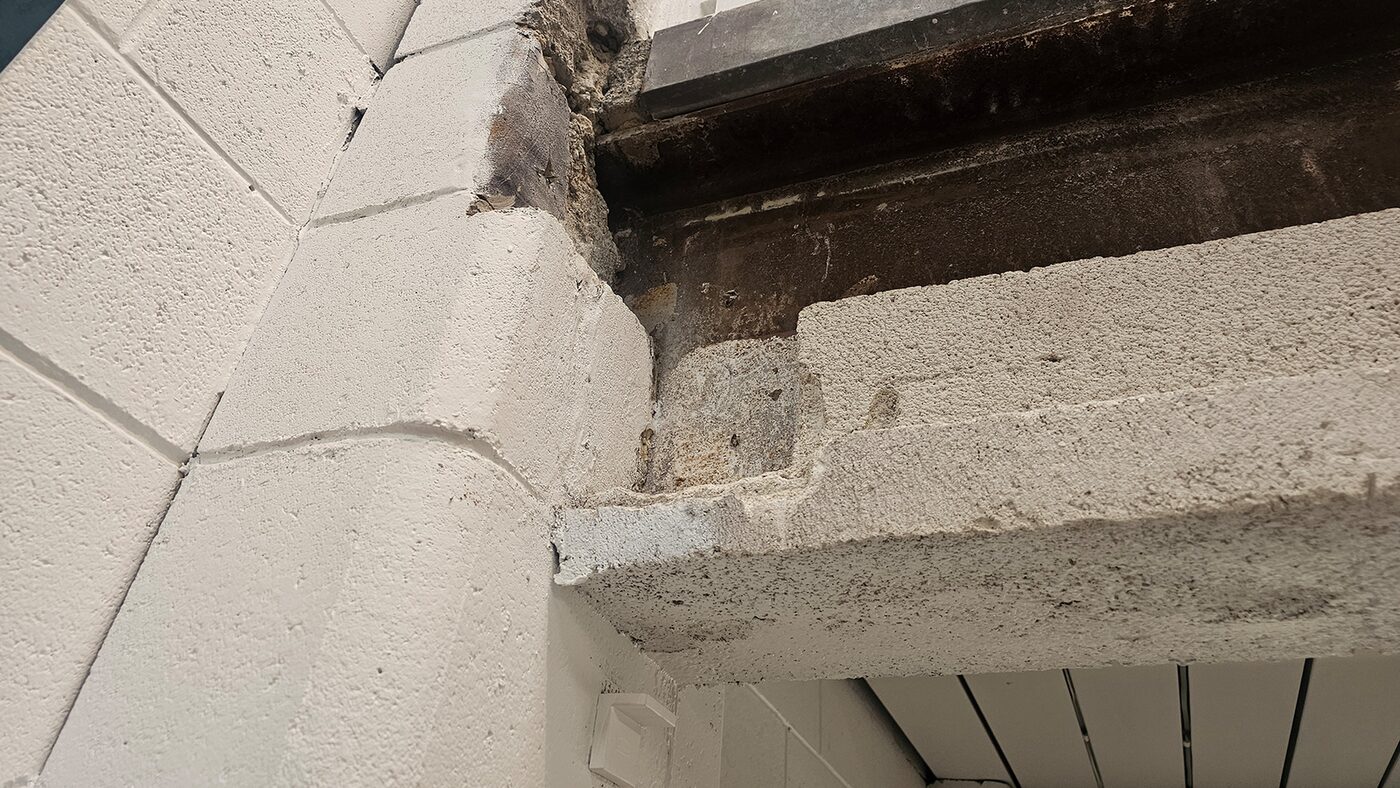
Structural investigation Brisbane work is a core TRSC service: a systematic, evidence-based assessment of an existing building's structural capacity and condition through non-destructive testing, material sampling, and engineering analysis. TRSC conducts structural investigations for complex existing assets where the cost of a wrong decision in either direction is high. Our investigations deploy ground-penetrating radar (GPR), Ferroscan, ultrasonic pulse velocity (UPV), Schmidt Hammer rebound testing, and half-cell potential mapping to characterise structures non-destructively. Where surface testing is insufficient, we extract cores and samples for NATA-certified laboratory analysis covering compressive strength, chloride content, carbonation depth, and petrographic examination.
The commercial premise is straightforward: accurate investigation enables proportionate decision-making. Measured structural data (chloride profiles, corrosion rates, residual capacity) consistently produces different conclusions from conservative desktop assumptions. At 12 Creek Street, quantified chloride levels below the corrosion threshold significantly reduced the required scope of facade intervention. These outcomes are not anomalies; they are the expected result of replacing assumption with data.
We take on investigations that other firms decline. Heritage buildings without original drawings, post-disaster structures with compromised access, marine infrastructure in aggressive environments, and assets with no existing structural records are core TRSC territory. Our engineers extract maximum structural information from minimum access, and every investigation is managed by an RPEQ-qualified structural engineer from scope definition through to report certification.
Every investigation delivers a structured engineering output: risk classification of each element per AS/NZS ISO 31000:2018, residual capacity calculations calibrated to tested material properties, and a recommended intervention pathway aligned with our Make Safe and Monitor hierarchy. The result is an RPEQ-certified report that gives asset owners, fund managers, and building certifiers the quantified evidence required to make defensible capital decisions.
Speak with an RPEQ-qualified structural engineer about this service.
Capabilities
Detailed Visual Inspection & Condition Documentation
Systematic inspection protocols with photographic documentation, crack mapping, spalling surveys, and corrosion classification to AS 3600 and relevant standards.
Non-Destructive Testing (GPR, Ferroscan, UPV, Schmidt Hammer)
Full NDT suite deployed on-site. Ground-penetrating radar for reinforcement location and void detection. Ferroscan for rebar mapping. Ultrasonic pulse velocity and rebound hammer for in-situ concrete quality assessment.
Half-Cell Potential & Chloride Penetration Testing
Electrochemical mapping to identify active corrosion probability. Chloride profiling to determine penetration depth and time-to-threshold, informing intervention urgency and maintenance schedules.
Material Sampling for NATA-Certified Laboratory Analysis
Core extraction, mortar sampling, and material specimens submitted to NATA-certified laboratories for compressive strength, carbonation depth, petrographic analysis, and durability characterisation.
Finite Element Analysis & Structural Modelling
Advanced FEA modelling calibrated to investigation findings. Capacity calculations reflecting actual material properties, section geometry, and load path conditions rather than conservative design assumptions.
Load Path Analysis & Capacity Calculations
Rigorous structural analysis quantifying current load-carrying capacity, redundancy, and failure modes. Results expressed as a risk classification matrix to directly inform intervention decisions.
Risk Classification & Make Safe Recommendations
Structured risk assessment following AS/NZS ISO 31000:2018. Each element classified by consequence (1–5) and likelihood (1–5), with proportionate Make Safe and Monitor recommendations.
RPEQ-Signed Investigation Reports
All investigation reports are certified by a Registered Professional Engineer of Queensland. Reports include executive summary, technical findings, risk classification, and recommended intervention pathway.
Frequently Asked Questions
What types of structures does TRSC investigate?
TRSC investigates concrete, masonry, steel, and composite structures across heritage buildings, high-rise commercial towers, marine infrastructure, hospitality assets, and industrial facilities. We specialise in complex or ambiguous structures where standard inspection approaches are insufficient, including post-disaster structures, assets without original drawings, and heritage-listed buildings.
How long does a structural investigation take?
Investigation duration depends on asset size, access constraints, and the scope of testing required. A single-building façade investigation typically takes two to five days on-site, with laboratory results returned within one to three weeks. Full investigation reports are generally issued within three to four weeks of completing field work. Emergency investigations can be mobilised within 24 to 48 hours.
When should I commission a structural investigation?
A structural investigation is warranted when you need to make a significant capital decision, whether to repair, remediate, strengthen, or replace, and the existing information is insufficient to support that decision confidently. It is also appropriate when a previous engineering report has recommended costly intervention, and you want an independent assessment of whether that intervention is actually required. If you're unsure whether an investigation is warranted, contact us for a no-cost preliminary discussion.
What is the difference between a structural investigation and a condition assessment?
A structural investigation focuses on structural adequacy and capacity, can this structure carry its intended loads, and what are the consequences if it cannot? A condition assessment focuses on the state of the structure, how deteriorated is it, and at what rate is it deteriorating? In practice, most TRSC engagements combine both, because the question 'what is wrong with this structure?' is inseparable from 'what does it mean for its structural performance?'
Do you provide structural investigation services in Brisbane?
Yes. Structural investigation services in Brisbane and SEQ are a core TRSC offering. A structural investigation Brisbane programme typically includes GPR, Ferroscan, UPV and laboratory sampling, then an RPEQ-signed report covering residual capacity and a recommended intervention pathway. We also investigate assets in NSW and Victoria under the relevant engineering registrations.
Do you provide RPEQ-signed reports?
Yes. All TRSC investigation reports are certified by a Registered Professional Engineer of Queensland (RPEQ). For assets in New South Wales or Victoria, TRSC holds engineering registrations in those jurisdictions and can issue appropriately certified reports. RPEQ certification is included as standard on all investigation engagements.
Book a consultation for Structural Investigation
Every engagement begins with a direct conversation with an RPEQ-qualified structural engineer. No sales intermediary, contact TRSC to discuss your asset and the scope of work required.
Other Services
All servicesStructural Condition Assessment & Building Condition Survey
Building, Existing and Construction Condition Surveys with RPEQ Reporting
Learn more →Dilapidation Survey
Engineer-Led Photo and Video Baseline of Neighbouring Property
Learn more →Structural Restoration & Remediation Design
Evidence-Based Structural Restoration, Repair & Strengthening for Existing Assets
Learn more →All TRSC Services
Locations We Serve
Need structural investigation for your project?
Get in touch