Concrete Scanning and Non-Destructive Testing
GPR, Ferroscan, and UPV Testing for Existing Structures
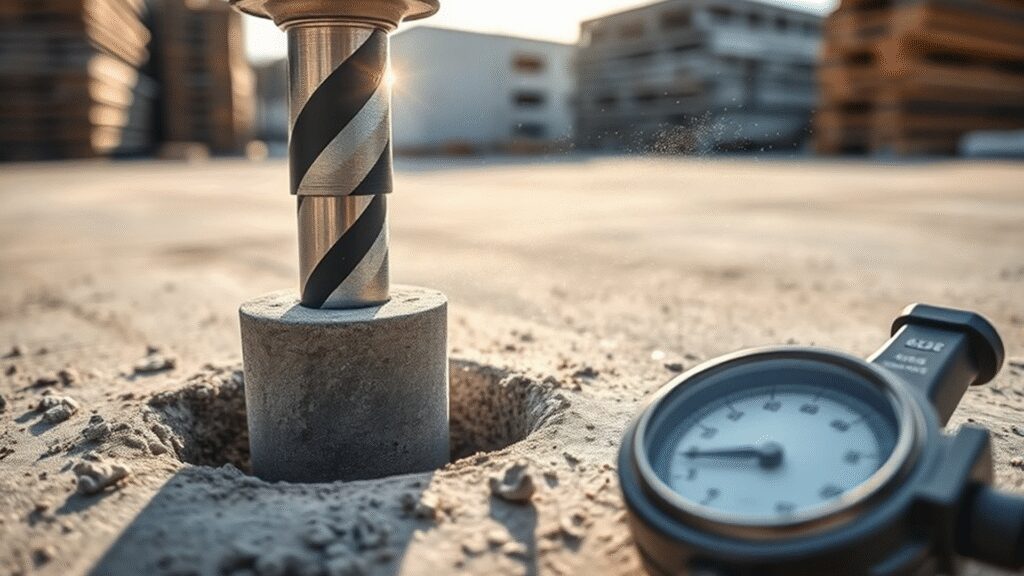
Concrete scanning and non-destructive testing (NDT) provides critical information about the internal condition of concrete structures without damaging them. TRSC deploys ground-penetrating radar (GPR), Ferroscan electromagnetic pulse induction, ultrasonic pulse velocity (UPV) testing, Schmidt Hammer rebound testing, half-cell potential mapping, and cover meter surveys to assess reinforcement location, concrete quality, corrosion risk, and structural integrity. These methods produce data that informs engineering decisions about renovation, remediation, strengthening, and safe coring or cutting locations.
Our scanning equipment covers the full range of NDT applications in structural engineering. GPR detects rebar, post-tensioning tendons, conduits, voids, and delamination at depths up to 450mm in concrete. Ferroscan provides detailed reinforcement mapping including bar diameter estimation and cover depth measurement. UPV testing assesses concrete uniformity and detects internal cracking or honeycombing. Schmidt Hammer provides rapid in-situ assessment of surface hardness correlated to compressive strength. Half-cell potential mapping identifies zones of active reinforcement corrosion. Cover meter surveys verify minimum concrete cover against AS 3600 durability requirements.
Concrete scanning is required before any coring, cutting, or drilling into existing concrete structures to avoid striking reinforcement, post-tensioning tendons, or embedded services. It is also essential during renovation and fit-out projects where new penetrations are needed through existing slabs, walls, and beams. For remediation design, scanning data determines the extent of reinforcement corrosion and guides the repair scope. For structural adequacy assessments, scanning confirms actual reinforcement layout against design assumptions or substitutes for missing design documentation.
What distinguishes TRSC from scanning-only companies is that our engineers interpret the data, not just collect it. A scanning company provides a mark-up of rebar locations and a data file. TRSC provides an engineering assessment of what the scanning results mean for the structure's capacity, condition, and remediation requirements. The scanning is part of a structural investigation, not a standalone service disconnected from engineering judgment. Every scanning report is issued by an RPEQ-qualified structural engineer who understands the structural context of the results and can advise on the implications for the project.
Speak with an RPEQ-qualified structural engineer about this service.
Capabilities
Ground Penetrating Radar Scanning
High-resolution GPR scanning for reinforcement location, post-tensioning tendon detection, conduit and void identification, and delamination mapping. Depth capability to 450mm in standard concrete. Results presented as 2D profiles and 3D mapping.
Ferroscan Reinforcement Mapping
Electromagnetic pulse induction scanning for detailed reinforcement mapping. Provides bar location, estimated diameter, spacing, and cover depth measurement. Used for as-built documentation where design drawings are unavailable.
Ultrasonic Pulse Velocity Testing
UPV testing to assess concrete uniformity, detect internal voids, honeycombing, and cracking, and estimate in-situ compressive strength. Cross-hole and surface measurement configurations for different access conditions.
Schmidt Hammer Rebound Testing
Rapid in-situ assessment of concrete surface hardness using Schmidt Hammer rebound. Correlated to compressive strength per AS 1012. Used for preliminary strength screening and identification of areas requiring core extraction.
Half-Cell Potential Mapping
Electrochemical measurement of reinforcement corrosion probability in concrete elements. Potential mapping per ASTM C876 to identify zones of active corrosion, passive reinforcement, and transition zones. Used to target corrosion-related remediation.
Cover Meter Survey
Electromagnetic cover meter measurement of concrete cover to reinforcement. Verification against AS 3600 minimum cover requirements for the relevant exposure classification. Used to assess durability performance and corrosion risk.
Core Extraction and Lab Analysis
Core extraction from concrete elements for NATA-certified laboratory testing. Compressive strength, carbonation depth, chloride content, petrographic analysis, and density measurement. Core locations selected based on NDT results to target areas of interest.
Carbonation Depth Measurement
Phenolphthalein indicator testing on freshly exposed concrete surfaces to measure carbonation front depth. Combined with cover depth data to assess time-to-reinforcement-depassivation and remaining service life.
Frequently Asked Questions
What can GPR detect in concrete?
Ground-penetrating radar (GPR) detects metallic and non-metallic objects embedded in concrete by transmitting electromagnetic pulses and recording the reflected signals from interfaces between materials of different density. In structural concrete, GPR reliably detects: steel reinforcement bars and mesh, post-tensioning tendons and ducts, metallic conduits and embedded services, voids and honeycombing within the concrete mass, delamination between concrete layers or between concrete and topping screeds, and changes in concrete density or composition. GPR can locate objects at depths up to approximately 450mm in standard concrete, though depth penetration varies with concrete composition, moisture content, and reinforcement density. GPR does not directly measure concrete strength or chemical composition. For those assessments, TRSC combines GPR with core extraction, UPV testing, and laboratory analysis. GPR is most commonly used before coring or cutting operations to locate reinforcement and tendons that must be avoided, and during structural investigations to map reinforcement layout where design drawings are unavailable.
What is the difference between GPR and Ferroscan?
GPR and Ferroscan are complementary technologies that detect different things using different physical principles. GPR uses electromagnetic radar pulses and can detect both metallic and non-metallic objects: reinforcement, tendons, conduits, voids, and delamination. It provides depth information and can scan through the full depth of a concrete element up to approximately 450mm. Ferroscan uses electromagnetic pulse induction and detects only ferromagnetic materials (steel reinforcement). However, Ferroscan provides more precise information about steel reinforcement than GPR: it estimates bar diameter, measures cover depth accurately, and produces detailed reinforcement maps showing bar spacing and layout. TRSC typically uses GPR for initial broad scanning to identify all embedded objects, then Ferroscan for detailed reinforcement mapping where precise bar size, spacing, and cover data is needed. For pre-coring safety scans, GPR is preferred because it detects non-metallic post-tensioning ducts that Ferroscan would miss. For remediation design requiring accurate reinforcement data, Ferroscan provides the higher-resolution data needed for engineering calculations.
Do I need a scanning company or a structural engineer for concrete scanning?
If you only need to know where to safely core or cut without hitting reinforcement, a scanning company can provide that service. However, if you need to understand what the scanning results mean for the structure, you need a structural engineer. A scanning company provides data: bar locations, cover depths, and anomaly flags. A structural engineer interprets that data in context: whether the cover is adequate for the exposure environment, whether the reinforcement layout matches the design or indicates a construction defect, whether a detected void is structurally relevant, and what the scanning results mean for the structure's capacity and remaining service life. TRSC provides both the scanning service and the engineering interpretation as an integrated package. Our RPEQ-qualified engineers conduct the scanning, interpret the results, and can immediately advise on the structural implications. This eliminates the gap between data collection and engineering judgment that occurs when scanning and engineering are procured separately.
How long does concrete scanning take on site?
Scanning duration depends on the area to be scanned, the number of elements, access conditions, and the testing methods required. For a single concrete element (slab panel, beam, wall section), GPR and Ferroscan can typically be completed in two to four hours. For a full building survey covering multiple floors and structural elements, on-site work typically requires one to three days. If additional testing is required (UPV, half-cell potential mapping, core extraction), each method adds time proportional to the number of test locations. TRSC provides a time estimate as part of the proposal so building managers can plan access and coordinate with other trades. Scanning is non-destructive and relatively quiet, so it can generally be conducted in occupied buildings without disrupting normal operations. The exception is core extraction, which generates noise and requires exclusion zones during cutting.
What do concrete scanning results tell you about the condition of a structure?
Scanning results provide a picture of the internal condition of concrete that cannot be obtained by visual inspection alone. Specifically, scanning results tell you: the location, spacing, and estimated diameter of reinforcement (does it match the design?); the concrete cover depth (is it sufficient for the exposure environment per AS 3600?); whether post-tensioning tendons or embedded services are present and where they are located; whether internal voids, honeycombing, or delamination exist within the concrete mass; the uniformity of concrete quality across the element (UPV testing); and the probability of active reinforcement corrosion (half-cell potential mapping). When combined with laboratory analysis of extracted cores (compressive strength, chloride content, carbonation depth), scanning results allow TRSC to assess the structure's current condition, estimate its remaining service life, and determine whether remediation, monitoring, or no action is the appropriate response. The engineering value of scanning is in the interpretation: raw data requires structural engineering judgment to become actionable information.
Book a consultation for Concrete Scanning and Non-Destructive Testing
Every engagement begins with a direct conversation with an RPEQ-qualified structural engineer. No sales intermediary, contact TRSC to discuss your asset and the scope of work required.
Other Services
All servicesStructural Investigation
Evidence-Based Assessment of Existing Asset Capacity
Learn more →Structural Condition Assessment & Building Condition Survey
Building, Existing and Construction Condition Surveys with RPEQ Reporting
Learn more →Dilapidation Survey & Pre-Construction Reports
RPEQ-Certified Pre-Construction Dilapidation Documentation for Adjacent Properties
Learn more →All TRSC Services
Locations We Serve
Need concrete scanning and non-destructive testing for your project?
Get in touch