Facade & Glazing Remediation Design
Evidence-Based Repair Specifications for Facades, Curtain Walls, Glazing Systems & Building Envelopes
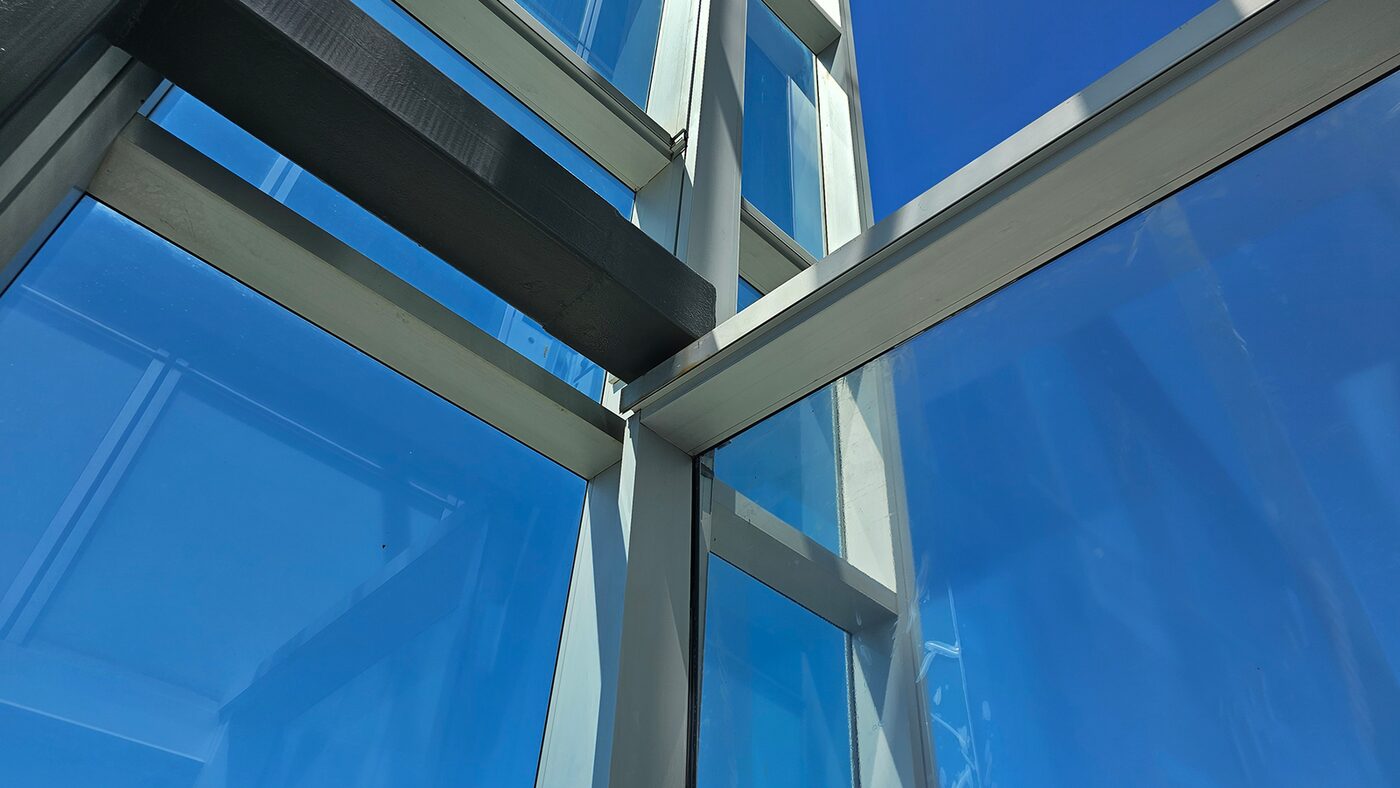
Facade and glazing remediation design starts where investigation ends. TRSC produces remediation specifications that are directly traceable to confirmed root cause findings, not conservative assumptions. The design addresses the mechanism driving each failure, whether that is sealant adhesion failure at a specific joint type, restraint-induced stress concentrations in a panel connection detail, chloride-induced corrosion of embedded steel within concrete spandrels, or thermal ratcheting in an aluminium sub-frame. Each specification is proportionate: we do not design full-system replacement when targeted component remediation will achieve equivalent performance.
Our remediation designs for facades and glazing systems cover the full range of building envelope elements: sealant joint replacement programmes sequenced by priority and condition stage, glazing panel replacement with structural design of replacement panels and sub-frame connections, concrete spandrel and feature element repair using EN 1504-compliant repair mortar systems, aluminium sub-frame rectification and corrosion treatment, stone panel consolidation and connection rectification, and waterproofing membrane replacement for facade-integrated planter boxes, sill trays, and parapet copings. Where access constraints require works to be staged, TRSC designs phased programmes aligned with building operations and capital planning cycles.
TRSC provides Form 15 RPEQ certification for facade and glazing remediation works. This is a structural engineering certification that many facade consultants cannot provide because they are not registered structural engineers. Form 15 is required under the Queensland Building Act 1975 when facade works constitute regulated building work. The equivalent RPEQ structural certification is required in NSW and VIC for works affecting structural elements of the facade. TRSC manages the certification pathway from investigation through to construction completion, providing the certifying engineer continuity across the investigation and design phases.
Construction support is included in our remediation design scope as standard. This covers review of contractor method statements, inspection of critical construction stages, certification of installed works via Form 12 (Queensland), and technical responses to site queries. The construction phase is where remediation programmes succeed or fail: a well-designed specification delivered without engineering oversight during construction will not achieve the intended outcome. TRSC stays engaged through to practical completion.
Speak with an RPEQ-qualified structural engineer about this service.
Capabilities
Sealant Joint Replacement Programmes
Condition-staged sealant replacement programmes covering joint preparation, substrate treatment, primer selection, and sealant specification to AS 4667:2005. Priority sequencing based on investigation findings: critical joints first, lower-priority joints in subsequent maintenance cycles.
Glazing Panel Replacement Design
Structural design of replacement glass panels to AS 1288:2006, including glass type, thickness, and interlayer selection. Sub-frame connection design for new panel weight and wind loading to AS/NZS 1170.2. Shop drawing review and RPEQ certification of installed replacement panels.
Concrete Facade Element Repair
Remediation specifications for concrete spandrels, feature elements, and facade structural frames using EN 1504-compliant repair systems. Repair class and system selection based on chloride profiling, carbonation depth, and corrosion state. Reinstatement of protective coating systems with specified minimum cover requirements.
Aluminium Sub-Frame & Fixing Rectification
Structural assessment and rectification design for aluminium mullion and transom sub-frames, anchor brackets, and fixings. Galvanic corrosion treatment, stainless steel fixing substitution, and structural upgrade design where sub-frames are inadequate for code-compliant loads.
Stone & Cladding Panel Consolidation
Structural consolidation design for stone panels (granite, sandstone, marble) and other cladding panel types with connection deficiencies. Supplementary pin, stitch, and adhesive systems. Re-anchoring specification where primary fixings have failed or corroded beyond acceptable limits.
Waterproofing & Moisture Management Design
Remediation design for facade-integrated waterproofing systems including parapet copings, sill trays, planter boxes, and step-flashing details. Material selection, joint detailing, and installation specification to prevent recurrence of the moisture ingress mechanism identified in the investigation.
Form 15 RPEQ Facade Certification
RPEQ-signed Form 15 structural adequacy certification for regulated facade building work. The certifying engineer is the same engineer who conducted the investigation, providing continuity of understanding across the investigation and design phases. Certification covers structural adequacy of the remediated facade element.
Construction Support & Form 12 Certification
Method statement review, critical stage inspections, and technical responses to site queries during construction. Form 12 completion certification on completion of regulated works. Engineering oversight through practical completion ensures the remediation is delivered as designed.
Frequently Asked Questions
Why do you need an RPEQ-certified engineer for facade remediation, not just a facade consultant?
Facade consultants are not structural engineers and cannot certify the structural adequacy of remediated facade elements. Form 15 (the Queensland RPEQ Structural Adequacy Certificate) is required under the Building Act 1975 when facade works constitute regulated building work affecting structural elements. The equivalent RPEQ certification is required in NSW and VIC for structural facade work. A facade consultant can specify sealant types and cladding products, but cannot certify that the structural sub-frame, anchor connections, and panel loads comply with AS/NZS 1170.2. TRSC provides both the facade engineering design and the RPEQ structural certification as a single integrated service, eliminating the certification gap that occurs when facade consultants and structural engineers are engaged separately.
What is a condition-staged remediation programme and why does TRSC use this approach?
A condition-staged programme divides the facade into elements by condition classification (typically five stages from new to end-of-life) and sequences remediation by stage, addressing critical elements first and lower-priority elements in subsequent maintenance cycles over three to ten years. This approach has two benefits. First, it avoids over-specification: elements classified as Stage 1 or Stage 2 (early deterioration) do not require the same intervention as Stage 4 or Stage 5 elements. Second, it spreads remediation expenditure across capital planning cycles rather than compressing the entire programme into a single capital event. TRSC has demonstrated condition-staged programmes at 140 William Street (Melbourne) and Q1 Tower, where phased interventions across multiple years have maintained facade performance while allowing operational continuity.
Can TRSC manage the full process from investigation through to completion?
Yes. TRSC provides an end-to-end service covering facade investigation, root cause analysis, remediation design, Form 15 RPEQ certification, construction support, critical stage inspections, and Form 12 completion certification. Engaging a single engineering practice across all phases eliminates the scope-gap risk that arises when investigation and design are split between separate firms. The certifying engineer who signs Form 15 is the same engineer who conducted the investigation and wrote the remediation specification, meaning the certification is backed by direct evidence, not a desktop review of someone else's work.
How does TRSC approach emergency facade stabilisation before full remediation design?
Where a facade investigation identifies elements that present an immediate safety risk, TRSC designs and certifies interim make-safe measures before the full remediation programme is finalised. Make-safe measures may include temporary edge protection and exclusion zones below at-risk elements, mechanical restraints to arrest panel movement, temporary sealant over-banding at critical joints, or netting systems to contain spalled material. These measures are designed to a standard that is safe for the period required to complete the full remediation design, typically three to six months. The Q1 Tower stitch plate installation following Cyclone Albert is an example: structural stainless steel plates were designed, certified, and installed within the emergency response window to stabilise the spire structure while the permanent remediation programme was developed.
Book a consultation for Facade & Glazing Remediation Design
Every engagement begins with a direct conversation with an RPEQ-qualified structural engineer. No sales intermediary, contact TRSC to discuss your asset and the scope of work required.
Other Services
All servicesStructural Investigation
Evidence-Based Assessment of Existing Asset Capacity
Learn more →Structural Condition Assessment & Building Condition Survey
Building, Existing and Construction Condition Surveys with RPEQ Reporting
Learn more →Dilapidation Survey & Pre-Construction Reports
RPEQ-Certified Pre-Construction Dilapidation Documentation for Adjacent Properties
Learn more →All TRSC Services
Locations We Serve
Need facade & glazing remediation design for your project?
Get in touch