Facade & Glazing Investigation
Root Cause Investigation for Facade Failures, Glazing Defects & Cladding Non-Compliance
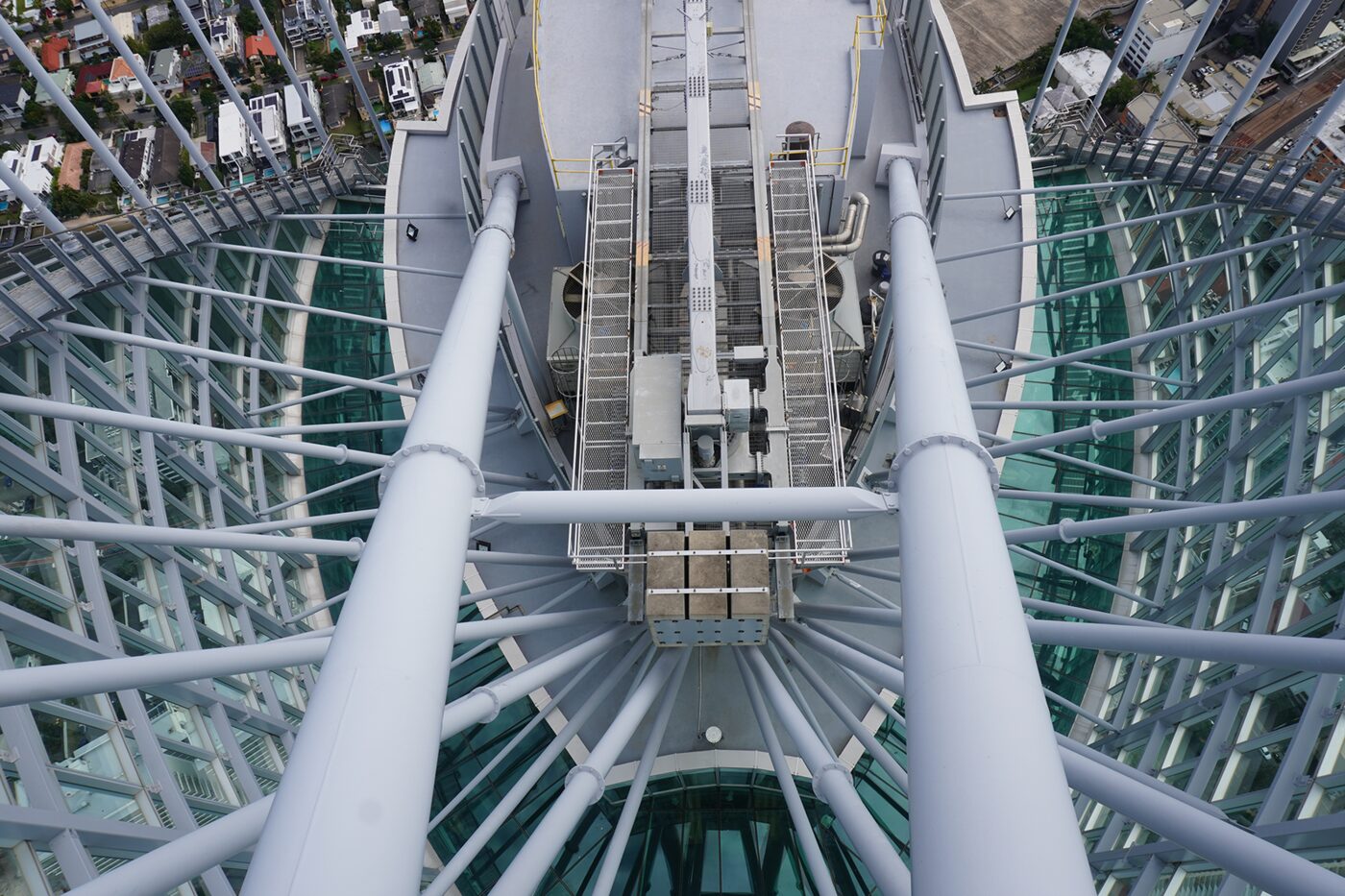
Facade and glazing failures are rarely what they appear to be. A leak at Level 12 may originate from a failed sealant joint at Level 15. A cracked granite panel may be restraint-induced stress at the connection detail, not impact damage. A curtain wall deflection may stem from a structural sub-frame that was never designed for the imposed thermal loads. TRSC conducts facade and glazing investigations that go beyond surface-level defect mapping to identify the root cause mechanism driving each failure. This is the foundation of proportionate remediation: you cannot design the right fix until you understand what is actually wrong.
Our facade investigation programme deploys the full NDT toolkit adapted for facade and glazing systems: GPR scanning to locate concealed fixings and sub-frame geometry, Ferroscan for embedded steel location, thermal imaging to identify moisture pathways and insulation voids, acoustic tap testing for delamination and hollow-bed tile detection, sealant probe and water injection testing to establish leak origin, and physical specimen extraction where chemical or petrographic analysis of sealants, gaskets, or concrete substrates is required. For high-rise assets, TRSC coordinates BMU drops and IRATA-qualified rope access to inspect inaccessible elevations. We have conducted facade audits at Q1 Tower (322.5m, the tallest building in Australia), and our team is experienced in the access management, wind constraints, and safety systems required for extreme-elevation facade work.
Facade investigations are assessed against the relevant Australian Standards and NCC requirements. NCC 2025 Performance Requirement F3P1 (weatherproofing) applies to new work and alterations, with transitional provisions impacting remediation scope. AS/NZS 4284:2008 provides the test methodology for building facade systems. AS 1288:2006 governs glass selection and thickness. AS 4667:2005 covers joint sealant design and application. TRSC engineers are fluent in these standards and their interaction with older facade systems that predate current requirements, including how to achieve equivalent performance without full-system replacement.
The investigation output is a structured engineering report classifying each facade element by condition, identifying root cause mechanisms, and recommending a prioritised intervention pathway. The report is RPEQ-certified and suitable for submission to building certifiers, owners corporations, and DBP-registered Design Practitioners under the NSW Design and Building Practitioners Act 2020. For assets requiring emergency stabilisation, TRSC provides interim make-safe recommendations within 24 to 48 hours of completing field inspection.
Speak with an RPEQ-qualified structural engineer about this service.
Capabilities
Visual & Physical Facade Condition Survey
Systematic elevation-by-elevation condition survey with defect mapping, photographic documentation, and condition classification. Covers sealant joints, panel fixings, glazing rebates, flashings, weep holes, and structural sub-frame visible elements.
GPR, Ferroscan & Thermal Imaging
Ground-penetrating radar to locate concealed fixings and structural elements. Ferroscan for embedded steel location and cover measurement. Thermal imaging to identify moisture ingress pathways, insulation voids, and thermal bridging within the facade assembly.
Water Infiltration & Leak Origin Testing
Systematic water testing following AAMA 501 and AS/NZS 4284:2008 methodology. Probe testing, water injection, and hose testing to trace leak origins from point of entry through the facade assembly to identify the primary failure mechanism.
BMU Drops & Rope Access Inspection
High-level facade access via building maintenance unit (BMU) drops and IRATA-qualified rope access. Demonstrated experience at Q1 Tower (322.5m). Access management, wind hold planning, and safety management plans provided as standard.
Sealant, Glazing & Gasket Condition Assessment
Physical condition assessment of sealant joints against AS 4667:2005, including adhesion testing, hardness testing, and visual assessment for cohesive/adhesive failure, shrinkage, chalking, and UV degradation. Glazing assessed to AS 1288:2006.
Root Cause Analysis Report
Systematic root cause determination for each identified failure mode. Not a defect list: a mechanistic explanation of why each failure occurred, addressing the driving load (wind, thermal, seismic, settlement), the material response, and the design or construction factor that allowed the failure to develop.
NCC 2025 & DBP Act Compliance Review
Assessment of facade systems against NCC 2025 Performance Requirement F3P1 (weatherproofing) and the NSW Design and Building Practitioners Act 2020. Identification of compliance gaps and remediation pathways to achieve equivalence or full compliance.
RPEQ-Certified Investigation Report
All facade investigation reports are certified by a Registered Professional Engineer of Queensland (RPEQ) with interstate registration in NSW and VIC. Reports are structured for acceptance by building certifiers, owners corporations, and legal proceedings.
Frequently Asked Questions
What is the difference between a facade inspection and a facade investigation?
A facade inspection is a condition observation: it records what is visible. A facade investigation is a root cause engineering analysis: it determines why the condition exists and what is driving it. Inspections are typically performed by technicians or building surveyors following a checklist. Investigations are performed by structural engineers who deploy testing equipment, analyse results against engineering principles, and produce RPEQ-certified findings. For any facade where remediation decisions need to be made, a structural investigation is required. An inspection alone cannot tell you whether the facade is safe, how urgent the intervention is, or what the correct repair method is.
When does a facade investigation require BMU or rope access?
BMU drops and rope access are required for any facade element that cannot be safely reached from the ground, a scaffold, or a scissor lift. For buildings above approximately 10 storeys, the upper elevations almost always require elevated access. BMU drops are used where a permanent building maintenance unit is installed. Rope access (IRATA-qualified) is used where no BMU exists or where access to specific elevation zones requires more flexibility than a BMU allows. TRSC coordinates access via the building management team and provides safety management plans, wind hold protocols, and site induction materials as part of our investigation scope.
Our building has water leaks but the source is not obvious. Can TRSC find it?
Yes. Water infiltration investigations are a core TRSC capability. The water source is often not where the leak presents. A leak at a window head may originate from a failed flashing above the parapet three levels higher. A pool deck leak may come from a planter box waterproofing breach on the opposite elevation. TRSC uses systematic water testing methodology (probe, hose, and water injection testing) combined with thermal imaging to trace the pathway from entry point to presentation point. The root cause analysis establishes the primary failure mechanism, which is the only basis for a durable repair. Without identifying the source, any remediation is guesswork.
What is the NCC 2025 weatherproofing requirement and how does it affect existing facades?
NCC 2025 Part F introduces Performance Requirement F3P1, which requires that external walls, roofs, and openings resist the penetration of water in a way that avoids undue dampness, deterioration of building materials, and unhealthy conditions. The NCC 2025 provisions apply to new building work and alterations on and after May 1, 2026. For existing facades, the requirement becomes relevant when alterations or additions are made that trigger building approval, or when a facade remediation scope is large enough to constitute building work under the applicable state building legislation. TRSC reviews NCC compliance implications as part of every facade investigation scope, so clients understand their obligations before committing to a remediation approach.
Does TRSC investigate combustible cladding compliance?
Yes. TRSC has delivered cladding compliance engineering across multiple buildings, including the University of Queensland four-building combustible cladding compliance programme. Our involvement covers structural assessment of existing sub-frames to confirm adequacy for replacement cladding, wind load calculations to AS/NZS 1170.2, design of modified fixing arrangements where required, and RPEQ Form 15 and Form 12 certification on completion. We work alongside cladding consultants and fire engineers as part of the broader compliance team, providing the structural engineering component of the compliance package.
Book a consultation for Facade & Glazing Investigation
Every engagement begins with a direct conversation with an RPEQ-qualified structural engineer. No sales intermediary, contact TRSC to discuss your asset and the scope of work required.
Other Services
All servicesStructural Investigation
Evidence-Based Assessment of Existing Asset Capacity
Learn more →Structural Condition Assessment & Building Condition Survey
Building, Existing and Construction Condition Surveys with RPEQ Reporting
Learn more →Dilapidation Survey & Pre-Construction Reports
RPEQ-Certified Pre-Construction Dilapidation Documentation for Adjacent Properties
Learn more →All TRSC Services
Locations We Serve
Need facade & glazing investigation for your project?
Get in touch