Forensic Engineering
Root Cause Analysis and Expert Structural Failure Investigation
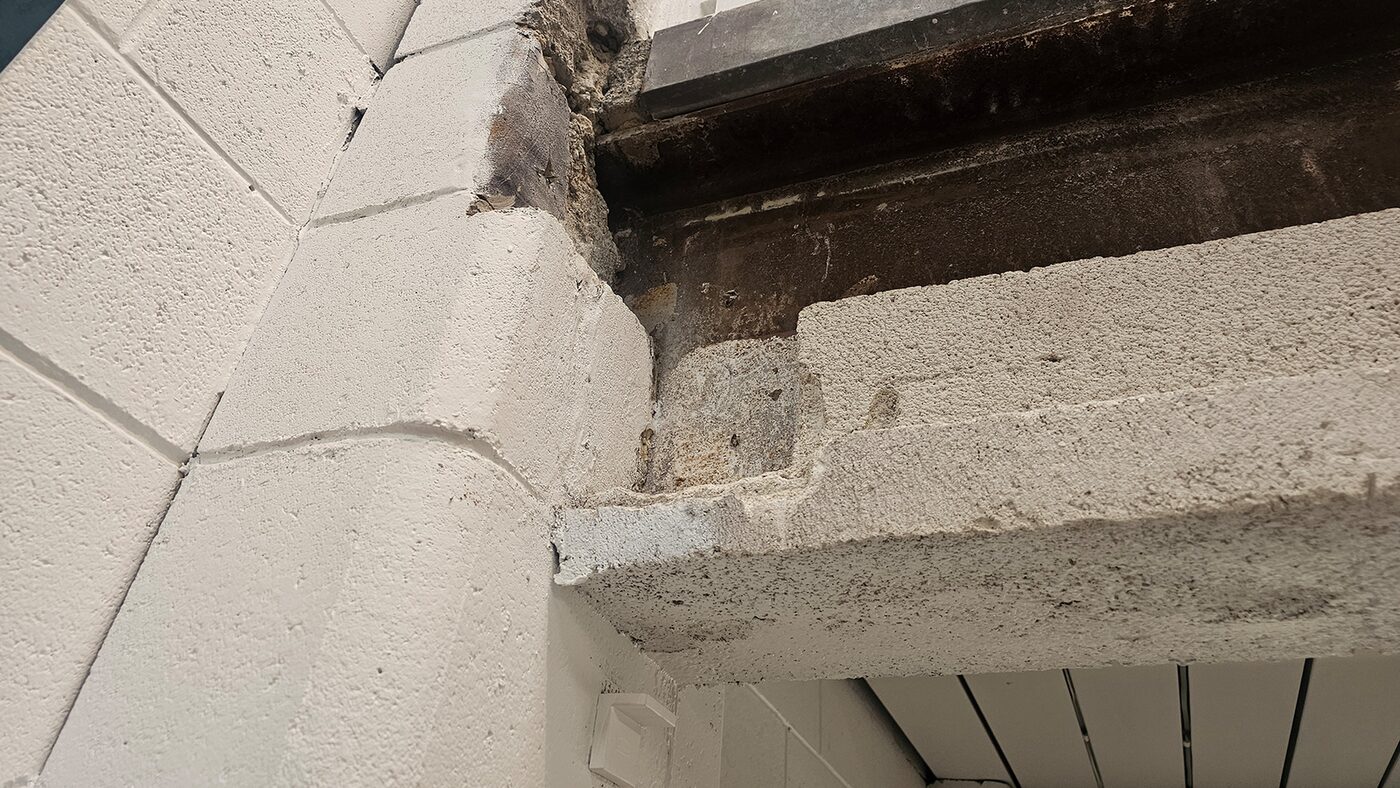
Forensic engineering applies engineering principles to determine the cause and mechanism of structural failure, building defects, and material degradation. Unlike a standard inspection, which records visible conditions, forensic engineering reconstructs the sequence of events that led to the failure. TRSC forensic engineers combine field investigation, laboratory analysis, and structural modelling to produce evidence-based conclusions about why a structure failed and who or what is responsible. Our findings stand up to cross-examination because they are traceable to physical evidence, tested material properties, and published engineering standards.
The investigation follows a structured methodology. Evidence is collected and preserved before any remediation disturbs the failure site. Non-destructive testing (GPR, Ferroscan, UPV) maps the internal condition of the structure. Material samples are extracted for NATA-certified laboratory analysis covering compressive strength, chloride content, carbonation depth, and petrographic composition. Where the failure mechanism requires it, finite element modelling reconstructs the load path at the time of failure. All analysis references AS 3600:2018 for concrete, AS 4100:2020 for steel, and EN 1504 for repair classification.
TRSC investigates structural collapses, progressive cracking, foundation failures, water damage to structural elements, fire damage, construction defects, design errors, and material failures. Our clients include insurance companies, loss adjusters, lawyers, property managers, strata managers, and building owners. Each investigation is scoped to answer a specific question: what failed, why it failed, and whether the failure was caused by design, construction, materials, maintenance, or external loading. The answer determines liability, remediation scope, and insurance entitlement.
Every forensic investigation produces an RPEQ-certified forensic report documenting the evidence, analysis, and conclusions. Where litigation is involved, TRSC provides expert witness testimony in court, tribunal, and mediation proceedings. The same engineer who investigates the failure also designs the remediation, eliminating the gap between diagnosis and treatment that occurs when separate firms handle each phase. Deliverables include cause-and-origin determination, remediation scope documents, cost-to-repair estimates, and betterment analysis for insurance claims.
Speak with an RPEQ-qualified structural engineer about this service.
Capabilities
Root Cause Failure Analysis
Systematic determination of the primary failure mechanism through evidence collection, testing, and engineering analysis. Each conclusion is traceable to physical evidence and published structural engineering standards.
Structural Defect Investigation
Detailed investigation of construction defects, design errors, and workmanship failures in concrete, masonry, steel, and composite structures. Includes review of design documentation against as-built conditions.
Expert Witness and Litigation Support
Expert witness testimony in court, tribunal, QCAT, and mediation proceedings. Expert reports prepared in accordance with UCPR requirements and the duties of expert witnesses under Queensland law.
Insurance Damage Assessment
Engineering assessment of structural damage for insurance claims. Includes cause-and-origin determination, cost-to-repair estimates, betterment analysis, and technical responses to insurer queries.
Construction Defect Analysis
Investigation of defects arising from construction methodology, workmanship, sequencing, and material substitution. Comparison of as-built conditions against design documentation and relevant Australian Standards.
Material Failure Investigation
Laboratory-based investigation of material failures including concrete degradation, steel corrosion, timber decay, and sealant breakdown. NATA-certified testing with engineering interpretation of results.
Water Damage and Ingress Forensics
Tracing water damage back to the point of entry and the failure mechanism that allowed ingress. Includes testing of waterproofing membranes, flashing details, and drainage systems.
Fire and Impact Damage Assessment
Assessment of structural capacity following fire exposure or physical impact. Residual strength determination for concrete, steel, and masonry elements based on temperature exposure estimates and material testing.
Frequently Asked Questions
What is the difference between a forensic engineering investigation and a standard structural inspection?
A standard structural inspection records the visible condition of a building at a point in time. It identifies what is there: cracks, spalling, corrosion staining, deflection, and settlement. The inspector documents observations and, in some cases, provides a professional opinion about condition or risk. A forensic engineering investigation goes further. It determines why the condition exists, what mechanism caused it, and whether the cause was design, construction, materials, maintenance, or external loading. The distinction matters because the answer to "why" determines liability, insurance entitlement, and the correct remediation approach. A crack can be caused by foundation movement, thermal cycling, overloading, corrosion-induced expansion, or construction defects, and each cause requires a different response. A standard inspection records the crack. A forensic investigation identifies the cause and supports the conclusion with physical evidence, laboratory testing, and engineering analysis. TRSC forensic investigations follow a structured methodology: evidence preservation, non-destructive testing, material sampling, laboratory analysis, structural modelling where required, and engineering conclusions referenced to AS 3600, AS 4100, and other applicable standards. Every conclusion in a forensic report is traceable to tested evidence, not professional opinion alone.
Can TRSC provide expert witness testimony for court proceedings?
Yes. TRSC engineers provide expert witness testimony in Supreme Court, District Court, Magistrates Court, QCAT, and formal mediation proceedings. Our expert reports are prepared in accordance with the Uniform Civil Procedure Rules (UCPR) and the duties imposed on expert witnesses under Queensland and Federal law. The expert witness role requires that the engineer's primary duty is to the court, not to the party that engaged them. TRSC takes this obligation seriously. Our expert reports present all relevant evidence, including evidence that may not support the engaging party's position, because credibility depends on completeness and objectivity. We have provided expert testimony on structural failure causation, construction defect disputes, insurance claims, strata defect matters, and professional negligence proceedings. Our principal engineer holds CPEng, RPEQ, MIEAust, NER, APEC Engineer, and IntPE(Aus) credentials, which are recognised across Australian jurisdictions. Expert reports include a statement of qualifications, a statement of the facts and assumptions relied upon, the methodology and reasoning, conclusions, and a declaration confirming compliance with expert witness duties.
What types of structural failures does TRSC investigate?
TRSC investigates a wide range of structural failures across concrete, masonry, steel, and composite construction. Common investigation types include: progressive cracking in walls, slabs, and beams caused by foundation movement, reactive soils, or overloading; concrete spalling and reinforcement corrosion caused by chloride ingress, carbonation, or insufficient cover; structural collapse or partial collapse of floor systems, roof systems, and retaining walls; water damage to structural elements from failed waterproofing, blocked drainage, or plumbing leaks; fire damage including assessment of residual concrete and steel capacity after heat exposure; construction defects from poor workmanship, incorrect detailing, or material substitution; and design errors where the original structural design was inadequate for the applied loads. We also investigate subsidence and settlement, structural adequacy of existing buildings for change of use, and failures of facade and cladding systems with structural fixings.
How long does a forensic engineering investigation typically take?
The duration depends on the complexity of the failure, the size of the structure, access constraints, and whether laboratory testing is required. A straightforward single-element investigation, such as a cracked retaining wall or a failed floor slab, typically takes two to four weeks from site inspection to report issue. This includes one to two days of on-site investigation, one to three weeks for laboratory results, and one week for report preparation. Complex multi-element investigations, such as a building-wide defect assessment or a construction dispute involving multiple parties, may take six to twelve weeks. Where court proceedings have set deadlines, TRSC works to those timelines and can expedite investigations when required. Emergency assessments for immediate safety determinations can be completed within 24 to 48 hours. The investigation report is typically the most time-intensive deliverable, as every conclusion must be supported by documented evidence and engineering analysis.
Do you work with insurance companies and loss adjusters?
Yes. TRSC works regularly with insurance companies, loss adjusters, and their appointed engineering consultants. We provide independent engineering assessments for property damage claims, liability disputes, and professional indemnity matters. Our reports are structured for insurance use: they include cause-and-origin determination, scope of damage, cost-to-repair estimates, betterment analysis where the repair would improve the structure beyond its pre-loss condition, and technical responses to queries from insurers or opposing experts. We work on both sides of the insurance relationship. We are engaged by insurers and loss adjusters to provide independent assessment of claimed damage, and by property owners and strata managers to support their claims with engineering evidence. In both cases, our obligation is to provide an accurate, evidence-based engineering opinion. We also provide engineering input to subrogation investigations where the insurer seeks to recover costs from a third party responsible for the damage.
Book a consultation for Forensic Engineering
Every engagement begins with a direct conversation with an RPEQ-qualified structural engineer. No sales intermediary, contact TRSC to discuss your asset and the scope of work required.
Other Services
All servicesStructural Investigation
Evidence-Based Assessment of Existing Asset Capacity
Learn more →Structural Condition Assessment & Building Condition Survey
Building, Existing and Construction Condition Surveys with RPEQ Reporting
Learn more →Dilapidation Survey & Pre-Construction Reports
RPEQ-Certified Pre-Construction Dilapidation Documentation for Adjacent Properties
Learn more →All TRSC Services
Locations We Serve
Need forensic engineering for your project?
Get in touch