Fortitude Music Hall
Conversion of a 1957 supermarket and former office building into a 3,300-capacity live music venue for Scott Hutchinson, John Collins and Paul Piticco, built by Hutchinson Builders.

Lachlan Pagan founded TRSC to work on one kind of structure: the ones already standing. He is a chartered structural engineer registered in Queensland, New South Wales and Victoria. Before TRSC he spent six years at ADG Engineers, where he was the structural engineer who designed the conversion of a 1957 Brunswick Street building into the Fortitude Music Hall, the project that set the direction for everything since.
TRSC does not design new buildings. That was a deliberate choice, and it came from specific projects rather than a marketing idea. These are the reasons, in Lachlan's own order.
312 Brunswick Street opened in 1957 as a Coles supermarket and later became the Optus Centre office building. In 2008 a developer bought it for a 30-storey, 363-apartment tower. That project stalled and the building sat empty in the middle of the Brunswick Street Mall.
In 2017 Scott Hutchinson, chairman of Hutchinson Builders, bought the site and teamed up with John "JC" Collins, former Powderfinger bassist and co-owner of The Triffid, and Paul Piticco, co-founder of Secret Sounds and the promoter behind Splendour in the Grass. Their plan was a mid-size venue to fill the gap Festival Hall left when it closed in 2003. Hutchinson paid for the site's apartment value and chose to keep the building, staying inside its existing envelope and stripping out the office interior.
Lachlan was the structural engineer who designed the conversion for ADG. Turning an office building into a concert hall changes nearly every load a structure carries: crowd loads on the floor and mezzanine, the dynamic load of an audience jumping in time, production rigging, and the removal of floors and walls to open up the room.
The Fortitude Music Hall opened on 26 July 2019. It holds up to 3,300 people and bills itself as the largest ballroom-style venue in Australia. The approved alternative was demolition and apartments. That project is the clearest answer Lachlan has to the question of why TRSC exists: the old building was the better asset, once someone did the engineering to prove it.
At ADG Lachlan also worked on new towers. On Skytower at 222 Margaret Street, ADG engineered the horizontal system, the post-tensioned floor slabs on all 90 levels, while Bonacci Group engineered the vertical structure. Lachlan worked with Dom Brock across the design, construction, inspection and certification of that slab system. He also worked on the Star Gold Coast tower at Broadbeach and Brisbane One at South Brisbane. That work taught him how much of a design practice's fee base depends on new construction, and how easily that pull can colour advice about an old building.
TRSC takes no new-build design work. When the evidence says monitor and wait, there is nothing to gain from saying otherwise. When it says intervene, the recommendation is the smallest intervention the evidence supports. TRSC works alongside the engineer of record rather than competing for their next job.
Most condition data about a building sits in separate systems: a survey contractor's prisms, a vibration logger, a crack gauge read by hand, a folder of test reports. Each one tells part of the story, and nobody holds the whole picture.
That gap is why Lachlan turned his focus to technology. TRSC treats monitoring and investigation data as one record of how the structure behaves, so decisions about an existing asset rest on what it is doing rather than what it might do.
Lachlan loves pubs and live music venues, and the buildings that house them are some of the most interesting structures in any city. A 140-year-old corner hotel has usually had a century of alterations, a mix of materials nobody fully documented, heritage controls on what can change, and it still has to hold a Friday night crowd.
TRSC's project list now includes the 1888 Prince Consort Hotel in Fortitude Valley, the Victory Hotel in the Brisbane CBD, the Durack Tavern in Brisbane's south-west and the Saltwater Creek Hotel at Helensvale on the Gold Coast.
These are the problems he enjoys most: a historic structure and a modern use that both have to work, with the engineering in between.
Lachlan studied structural engineering at QUT and joined ADG Engineers in Brisbane in 2015. Over six years he designed post-tensioned transfer and podium slabs for towers, worked on the design, inspection and certification of the post-tensioned floor slabs for Skytower at 222 Margaret Street, and worked on infrastructure including the Cross River Rail temporary works. He learned how new buildings are designed from the inside.
The work he enjoyed most was the opposite: old buildings being asked to do something new, such as a 1950s supermarket-turned-office in the Valley becoming a 3,300-capacity concert hall. The answer came from measuring the building rather than assuming the worst about it.
After ADG he spent 2022 to 2024 as a director and shareholder of another engineering business. He left to concentrate on what he cared about most: technology, starting businesses, designing software, and existing structures, particularly the pubs, halls and music venues where he spends his own time. TRSC is the result.
Lachlan leads TRSC's investigation, monitoring, forensic engineering, remediation design and product design work. His focus is combining tools that the industry usually keeps separate, such as automatic total stations, tilt, vibration and crack sensors, scanning and material testing, into a single record of how a structure is actually behaving.
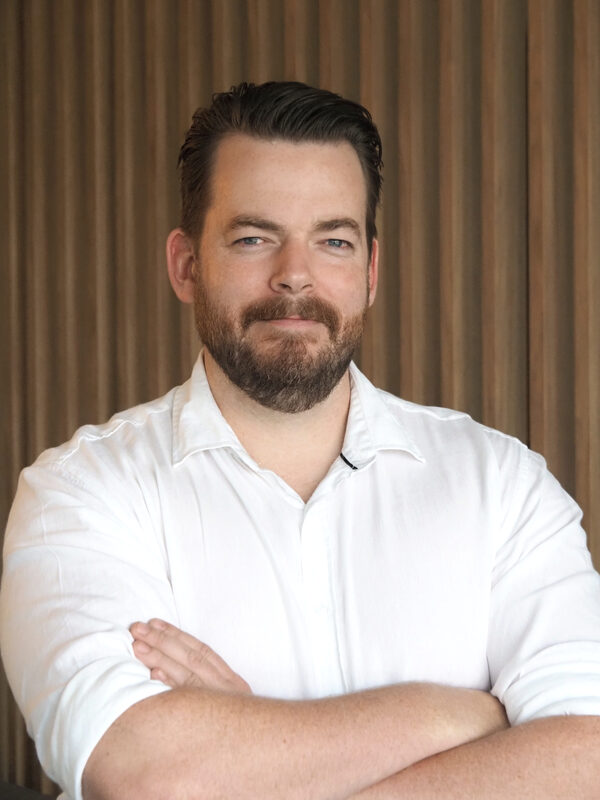
Leads investigation, monitoring, forensic engineering, remediation design and product design for existing assets across Queensland, New South Wales and Victoria.
Co-owned and directed an engineering business before leaving to concentrate on technology, software design and existing structures.
Towers (Skytower, Star Gold Coast, Brisbane One), heritage conversion (Fortitude Music Hall) and infrastructure (Cross River Rail temporary works).
Conversion of a 1957 supermarket and former office building into a 3,300-capacity live music venue for Scott Hutchinson, John Collins and Paul Piticco, built by Hutchinson Builders.
ADG engineered the horizontal system, the post-tensioned slabs on all 90 levels, with Bonacci Group on the vertical structure. Lachlan worked with Dom Brock on the slab design, construction support, inspection and certification.
Spire facade audit and emergency response after Tropical Cyclone Alfred in March 2025, including stainless steel stitch plates as a make-safe and a permanent remediation specification.
Design and construction support for the Northern Portal and Boggo Road temporary shoring, plus temporary steel frames at Roma Street, Woolloongabba and Albert Street stations.
Finding the mechanism behind cracking, movement, corrosion and water ingress before anyone designs a repair.
Proving how much capacity an old structure really has when it is asked to take new floors, new uses or new crowds.
Heritage hotels, halls and venues where a historic structure has to carry a modern crowd and stay open while it is fixed.
Automatic total stations, tilt, vibration and crack sensors brought together with trigger levels and automated alarms.
Condition assessment and remedial design for facades, curtain walls, glazing and street awnings on existing buildings.
Rapid make-safe and condition assessment after cyclones, storms and impact damage, from street level to 300 metres up.
Brisbane CBD and Fortitude Valley, Greater Brisbane, Gold Coast, Sunshine Coast, Toowoomba and regional Queensland, Interstate projects in New South Wales and Victoria.
Send the address, what you are seeing, and any photos or reports. Lachlan replies within one business day.
Send an enquiry